The Sched app allows you to build your schedule but is not a substitute for your event registration. You must be registered for PyTorch Conference Europe 2026 to participate in the sessions. If you have not registered but would like to join us, please go to the event registration page to purchase a registration.
This schedule is automatically displayed in CEST (UTC/GMT +2). To see the schedule in your preferred timezone, please select from the drop-down menu to the right, above "Filter by Date."
Sign up or log in to add sessions to your schedule and sync them to your phone or calendar.
As on-device AI workloads grow in complexity, achieving low-latency inference within mobile power constraints remains a central challenge. We examine how ExecuTorch, combined with Arm’s Scalable Matrix Extension 2 (SME2), enables efficient CPU deployments of production AI workloads. We present a case study of SqueezeSAM, a segmentation model deployed in real-world mobile applications. Using ExecuTorch with XNNPACK delegation and SME2-optimized kernels, we evaluate INT8 and FP16 inference on a flagship smartphone. Moving beyond aggregate latency, we apply operator-level profiling to decompose runtime across convolution, GEMM, elementwise, and data movement operators, showing how hardware acceleration reshapes bottlenecks in the execution stack. SME2 delivers up to 3.9x end-to-end speedup on a single CPU core, materially altering runtime composition and revealing data movement as the primary post-acceleration bottleneck. This session presents a practical workflow for deploying, profiling, and systematically optimizing on-device PyTorch models, demonstrating how SME2 expands the viable design space for interactive mobile AI.
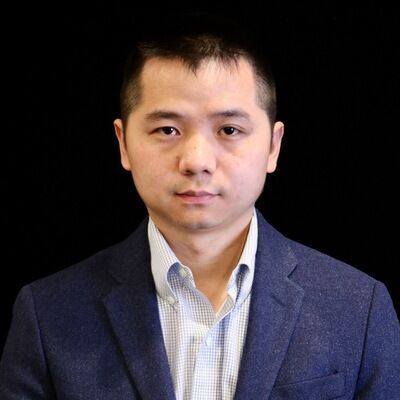
Jason Zhu is a Senior Principal Engineer at Arm focused on hardware and software co-optimization for AI systems. With a background in quantum physics and experience spanning AI research and product engineering across major technology companies, he works across the full execution stack... Read More →